In the Life of the Church, we celebrate the Nativity of John the Baptist on June 24th. Born to righteous parents, Ss Elizabeth & Zachariah in their elder age, John's mission in life was to proclaim and announce the coming of the Messiah.
Image Source
"He must increase, but I must decrease"; this verse taken from the Gospel according to St John the Theologian (3:30) quoting St John the Forerunner and Baptist of our Lord is a beautifully stated and essential reminder for all Christians. He is explaining to his followers the fulfillment of his ministry in proclaiming the good news of the coming of our Lord, God and Savior, Jesus Christ into the world.
St John calls himself the "friend of the bridegroom, who stands and hears Him, rejoices greatly because of the bridegroom's voice. "Therefore this joy of mine is fulfilled" (John 3:29). What a remarkable example of the love of God and understanding of one's purpose in life!
Our Lord says of John, "For I say to you, among those born of women there is not a greater prophet than John the Baptist, but he who is least in the Kingdom of God is greater than he" (Luke 7:28).
I recently read an amazing book reflecting on the life and purpose of St John the Baptist entitled The Friend of the Bridegroom: On the Orthodox Veneration of the Forerunner by Sergius Bulgakov. I strongly encourage you to read it as well.
Through the prayers of the Forerunner, O Lord our God, have mercy upon us!
- A Day in the Life of the Youth Director
A melting pot of my own random thoughts, stories, experiences, and quotes from smarter people than myself. The posts are intended to be light-hearted and humorous; just something to enjoy while explaining "A Day in the Life of the Youth Director."
Thursday, June 23, 2011
Tuesday, June 21, 2011
The Bearded Orthodox Man
Many Orthodox men wear a beard (or some form of facial hair), especially among its clergy. The beards vary among the Orthodox faithful men, but there is definitely a significance behind the scruff.
"Orthodox Christian piety begins in the Holy Tradition of the Old Testament. Our relationship to the Lord God, holiness, worship, and morality was formed in the ancient times of the Bible. At the time of the foundation of the priesthood the Lord gave the following commandments to the priests during periods of mourning, And ye shall not shave your head for the dead [a pagan practice] with a baldness on the top; and they shall not shave their beard... (Lev. 21:5), and to all men in general, Ye shall not make a round cutting of the hair of your head, nor disfigure your beard (Lev. 19:27). The significance of these commandments is to illustrate that the clergy are to devote themselves completely to serving the Lord. Laymen as well are called to a similar service though without the priestly functions."
Source
A great article written over at http://www.orthodoxhistory.org/ entitled: "To shave or not to shave?," gives an account from an early 20th century priest in America and his encounter about his own beard (the story even reached local newspaper outlets!). Enjoy it HERE.
Now, I'd love to claim such piety when it comes to such practice, but sadly this isn't the case for me. Those who see me on a regular basis will notice that I go days without shaving for periods of time; and sometimes, I do enjoy keeping a small goatee with a cool 'stach to accompany it. To be honest, I simply hate shaving.
As a child, I fondly remember watching my dad in the morning shaving before work. My baba would help me lather my face up with shaving cream (even though I was baby-faced), and let me use the bottom end of a toothpaste tube to scrape away the cream and invisible facial hair. I'm sure most young boys have this same memory as a child; a very fond one for me!
I remember growing up, anxious for some stubble to really shave away...I wasn't a patient child. I'd constantly complain that I couldn't wait to shave, to which my dad would kindly respond, "hold off as long as possible, once you start, you won't be able to stop."
As with most things, I hate to admit it, but of course he was right! I dread having to shave, hence the days-long scruff that adorns my face. So, while most Orthodox men "sport" a beard out of piety, sadly its usually laziness that gets the best of me.
But, that's just our lil' secret, right?! I welcome some "beard" stories of your own!
Enjoy some "sporty" looking beards below:
Image Source
Image Source
Image Source
Image Source
Image Source
Image Source
Image Source
Image Source
- A Day in the Life of the Youth Director
"Orthodox Christian piety begins in the Holy Tradition of the Old Testament. Our relationship to the Lord God, holiness, worship, and morality was formed in the ancient times of the Bible. At the time of the foundation of the priesthood the Lord gave the following commandments to the priests during periods of mourning, And ye shall not shave your head for the dead [a pagan practice] with a baldness on the top; and they shall not shave their beard... (Lev. 21:5), and to all men in general, Ye shall not make a round cutting of the hair of your head, nor disfigure your beard (Lev. 19:27). The significance of these commandments is to illustrate that the clergy are to devote themselves completely to serving the Lord. Laymen as well are called to a similar service though without the priestly functions."
Source
A great article written over at http://www.orthodoxhistory.org/ entitled: "To shave or not to shave?," gives an account from an early 20th century priest in America and his encounter about his own beard (the story even reached local newspaper outlets!). Enjoy it HERE.
Now, I'd love to claim such piety when it comes to such practice, but sadly this isn't the case for me. Those who see me on a regular basis will notice that I go days without shaving for periods of time; and sometimes, I do enjoy keeping a small goatee with a cool 'stach to accompany it. To be honest, I simply hate shaving.
As a child, I fondly remember watching my dad in the morning shaving before work. My baba would help me lather my face up with shaving cream (even though I was baby-faced), and let me use the bottom end of a toothpaste tube to scrape away the cream and invisible facial hair. I'm sure most young boys have this same memory as a child; a very fond one for me!
I remember growing up, anxious for some stubble to really shave away...I wasn't a patient child. I'd constantly complain that I couldn't wait to shave, to which my dad would kindly respond, "hold off as long as possible, once you start, you won't be able to stop."
As with most things, I hate to admit it, but of course he was right! I dread having to shave, hence the days-long scruff that adorns my face. So, while most Orthodox men "sport" a beard out of piety, sadly its usually laziness that gets the best of me.
But, that's just our lil' secret, right?! I welcome some "beard" stories of your own!
Enjoy some "sporty" looking beards below:
| Greek Orthodox priest |
| Russian Orthodox priest |
| St Raphael Hawaweeny |
| Ss Onuphrius & Paphnutius |
| St Maximus the Greek |
| Bulgarian Orthodox bishops |
| St John Maximovitch |
| Our Lord, God & Savior, Jesus Christ |
- A Day in the Life of the Youth Director
Monday, June 6, 2011
Kentucky Derby Party in Houston, TX
On the "first Saturday in May" is the Kentucky Derby in Louisville, KY (my hometown). The "Run for the Roses" is a horserace thats known as the "greatest two minutes in sports!"
This past Saturday, May 7th I hosted a Kentucky Derby/Birthday Party with friends and family - to give them a little slice of Kentucky fun! It was an awesome affair in the Houston area with plenty of Kentucky favorites: Derby decor (thanks to Mama Fuller who mailed me plenty of decorations), Kentucky Derby Pies, lunch from Kentucky Fried Chicken, and plenty of Kentucky bourbon for specialty mint julips.


Thanks to all my friends who came out to celebrate my birthday and enjoy a "day at the races!"
- A Day in the Life of the Youth Director
This past Saturday, May 7th I hosted a Kentucky Derby/Birthday Party with friends and family - to give them a little slice of Kentucky fun! It was an awesome affair in the Houston area with plenty of Kentucky favorites: Derby decor (thanks to Mama Fuller who mailed me plenty of decorations), Kentucky Derby Pies, lunch from Kentucky Fried Chicken, and plenty of Kentucky bourbon for specialty mint julips.
Enjoy some pictures from the festivities below:
![]() |
| Conducting my own "Happy Birthday" rendition |
![]() |
| Pretty ladies in fancy hats |

![]() |
| Haddad & Araj Families |

![]() |
| Stratos Unidos & Shining Star |
![]() |
| The other Birthday boy - George |
![]() |
| Sobchak Family |
![]() |
| Kh. Valerie & my cousin Joe |
![]() |
| Betty Draper in the kitchen |
![]() |
| A dessert fight broke out... |
![]() |
| It was a heated exchange... |
![]() |
| The aftermath! |
![]() |
| Dolled-up Stratos |
![]() |
| Michael and his hands |
- A Day in the Life of the Youth Director
Thursday, June 2, 2011
Christ Has Ascended in Glory!
In the Life of the Church, we celebrate one of the 12 major feasts (The Ascension of our Lord, God and Savior, Jesus Christ) on the 40th day following the Feast of Feasts - our Lord's Resurrection. Therefore, this year the great feast of the Ascension is celebrated on Thursday, June 2nd in the Life of the Church!
This great event, with which Jesus' life on earth concludes, is briefly mentioned in the Gospels of Mark and Luke, with a much fuller account in the Acts of the Apostles. Gathering His disciples, Jesus commanded them not to leave Jerusalem , but to await what had been promised by the Father, that is the descent of the Holy Spirit.
Then, He went with His disciples to Bethany and stopped on the Mount of Olives. "While they beheld, He was taken up, and a cloud received Him out of their sight. And while they looked steadfastly toward heaven as He went up, behold, two men stood by them in white apparel, who also said, 'Ye men of Galilee , why stand ye gazing up into heaven? This same Jesus, who is taken up from you into Heaven, shall so come in like manner as ye have seen Him go into Heaven'" (Acts 1:9-11).
Image Source
According to the account given in Luke's gospel: "And He led them out as far as Bethany, and He lifted up His hands and blessed them. Now, it came to pass, while He blessed them, that He was parted from them and carried up into heaven. And they worshiped Him, and returned to Jerusalem with great joy..." (Luke 24:50-53).
Jesus, their Master, leaves them, yet His disciples are filled with great joy. Its an odd reality to grasp; the comfort of being in the presence of their Lord, especially witnessing His Resurrection and being "filled with great joy" at His departure from them. But the reason for such a feeling among the Disciples is the promise given to them: Jesus tells them that He must go to the Father, but He will send the Holy Spirit upon them.
We celebrate this feastday soon (in 10 days) on the Great Feast of Pentecost (the descent of the Holy Spirit). Christ's Ascension is a glorious occasion; "the crowning achievement of His earthly mission."
Troparion of the Feast of the Ascension (Tone 4): “Thou hast ascended in glory, O Christ our God, and gladdened thy Disciples with the promise of the Holy Spirit, having become confident of the blessing. Verily, thou art the Son of God, and Deliverer of the world.”
Wishing you and your family a blessed great feast of the Ascension!
- A Day in the Life of the Youth Director
This great event, with which Jesus' life on earth concludes, is briefly mentioned in the Gospels of Mark and Luke, with a much fuller account in the Acts of the Apostles. Gathering His disciples, Jesus commanded them not to leave Jerusalem , but to await what had been promised by the Father, that is the descent of the Holy Spirit.
Then, He went with His disciples to Bethany and stopped on the Mount of Olives. "While they beheld, He was taken up, and a cloud received Him out of their sight. And while they looked steadfastly toward heaven as He went up, behold, two men stood by them in white apparel, who also said, 'Ye men of Galilee , why stand ye gazing up into heaven? This same Jesus, who is taken up from you into Heaven, shall so come in like manner as ye have seen Him go into Heaven'" (Acts 1:9-11).
![]() |
| Ascension of our Lord |
According to the account given in Luke's gospel: "And He led them out as far as Bethany, and He lifted up His hands and blessed them. Now, it came to pass, while He blessed them, that He was parted from them and carried up into heaven. And they worshiped Him, and returned to Jerusalem with great joy..." (Luke 24:50-53).
Jesus, their Master, leaves them, yet His disciples are filled with great joy. Its an odd reality to grasp; the comfort of being in the presence of their Lord, especially witnessing His Resurrection and being "filled with great joy" at His departure from them. But the reason for such a feeling among the Disciples is the promise given to them: Jesus tells them that He must go to the Father, but He will send the Holy Spirit upon them.
We celebrate this feastday soon (in 10 days) on the Great Feast of Pentecost (the descent of the Holy Spirit). Christ's Ascension is a glorious occasion; "the crowning achievement of His earthly mission."
Troparion of the Feast of the Ascension (Tone 4): “Thou hast ascended in glory, O Christ our God, and gladdened thy Disciples with the promise of the Holy Spirit, having become confident of the blessing. Verily, thou art the Son of God, and Deliverer of the world.”
Wishing you and your family a blessed great feast of the Ascension!
- A Day in the Life of the Youth Director
Tuesday, May 24, 2011
Not Just a Famous Quote, but Words to Live By
Short, simple, and straight to the point...thats how we like our words to be. People love little sayings and quotes, whether we put them on our refrigerator, in our offices, or on the bumper of our cars.
Little reminders to help us get through the day, describe our personality, explain our reasoning. Whether it be a single word or a short sentence; just get straight to the point!
We love inspirational thoughts, famous quotes, and slogans.
Well, here's one of my favorites: "I am a great sinner and Christ is a great Savior."
These words spoken by John Newton, the former slave trader turned Anglican clergyman in England during the 18th century. After experiencing a religious conversion, he became a minister, hymn-writer, and later a prominent supporter of the abolition of slavery. He was the author of many hymns, including "Amazing Grace."
This quote, or as I like to think, words to live by, is not one society would like us to place great importance upon. These words call for great humility and faith, which is obviously not an easy task.
To me, its the Protestant version of the Orthodox "Jesus Prayer:" the ascetic practice of reciting, "Lord Jesus Christ, Son of God, have mercy upon me, a sinner."
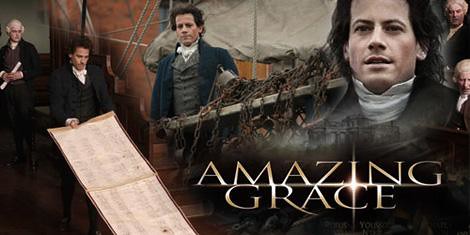
I'd also like to take this opportunity to offer a movie recommendation. Amazing Grace (released in 2006) tells the story of the antislavery pioneer, William Wilberforce, who, as a Member of Parliament, navigated the world of 18th century backroom politics to end the slave trade in the British Empire.
Image Source
Its an amazing film (excuse the pun) that entertains with an all-star cast, while telling the true story of the movement to abolish slavery in the British Empire (of course, taking certain liberties with historical facts), and offers the viewer a sense of moral responsibility with their own life.
- A Day in the Life of the Youth Director
Little reminders to help us get through the day, describe our personality, explain our reasoning. Whether it be a single word or a short sentence; just get straight to the point!
We love inspirational thoughts, famous quotes, and slogans.
Well, here's one of my favorites: "I am a great sinner and Christ is a great Savior."
These words spoken by John Newton, the former slave trader turned Anglican clergyman in England during the 18th century. After experiencing a religious conversion, he became a minister, hymn-writer, and later a prominent supporter of the abolition of slavery. He was the author of many hymns, including "Amazing Grace."
This quote, or as I like to think, words to live by, is not one society would like us to place great importance upon. These words call for great humility and faith, which is obviously not an easy task.
To me, its the Protestant version of the Orthodox "Jesus Prayer:" the ascetic practice of reciting, "Lord Jesus Christ, Son of God, have mercy upon me, a sinner."
I'd also like to take this opportunity to offer a movie recommendation. Amazing Grace (released in 2006) tells the story of the antislavery pioneer, William Wilberforce, who, as a Member of Parliament, navigated the world of 18th century backroom politics to end the slave trade in the British Empire.
Image Source
Its an amazing film (excuse the pun) that entertains with an all-star cast, while telling the true story of the movement to abolish slavery in the British Empire (of course, taking certain liberties with historical facts), and offers the viewer a sense of moral responsibility with their own life.
- A Day in the Life of the Youth Director
Tuesday, May 17, 2011
What I Learned in Bible Study This Morning
Quote of the day, from Bible Study this morning: "Everything you do in life is a learning experience, you either learn to repeat it or avoid it again." -Fr. John
Of course, I learned a great deal more...we are studying St Paul's Epistle to the Romans at St George Antiochian Orthodox Church in Houston, TX led by the Very Rev. Fr. John Salem.
Image Source
Join us on Tuesday mornings at 10:00a for a lively discussion, coffee/tea, and sweets; although we are a party-hard bunch, we do actually learn some great things!
![]() |
| Orthodox Study Bible |
- A Day in the Life of the Youth Director
Friday, May 13, 2011
Ss Constantine & Helena, Equal-to-the-Apostles & Outdoor Shrine
On May 21st in the Life of the Church, we commemorate Ss Constantine & Helena (Emperor and his Mother). These two saints of the Orthodox Faith are extremely important due to their great influence of spreading Christianity throughout the Roman Empire in the 4th century. Great "mythology" follows their lasting legacy upon the Christian Church and impact of Roman society.
Image Source
Constantine the Great is a polarizing figure in history; there are many questions regarding his status as a political leader, influencial personality, and Christian. Many historians question his Christianity, especially due to the fact that that he was only baptized on his deathbed (although this was common practice during this time), as well as his stance during the great theological debates of his time.
During his struggle to gain power of the Empire as its sole ruler, he prayed to God to give him a sign which would inspire his army to fight valiantly, and the Lord showed him a radiant Sign of the Cross in the heavens with the inscription "In this Sign, conquer."
After Constantine became the sole ruler of the Western Roman Empire, he issued the Edict of Milan in 313 which guaranteed religious tolerance for Christians. In 323, when he became the sole ruler of the entire Roman Empire, he extended the provisions of the Edict of Milan to the Eastern half of the Empire. After three hundred years of persecution, Christians could finally practice their Faith without fear.
Renouncing paganism, the Emperor did not let his capital remain in ancient Rome, the former center of the pagan realm. He transferred his capital to the East, to the city of Byzantium, which was renamed Constantinople. The new emperor was deeply convinced that only Christianity could unify the immense Roman Empire with its diverse peoples. He supported the Church in every way, recalling Christian confessors from banishment, building churches, and showing concern for the clergy.
His mother, Helena provided great influence over her son as he became the sole ruler of the Roman Empire and its transition from paganism into a Christian Empire. She traveled to Palestine in search of the Holy & Live-Giving Cross of our Lord. While in Palestine, the holy empress did much to benefit the Church. She ordered that all places connected with the earthly life of the Lord and His All-Pure Mother, should be freed of all traces of paganism, and she commanded that churches be built at these sites.
Because of their great service to the Church and efforts in converting the masses to Christianity, the emperor Constantine and his mother, Helena are called "the Equal-to-the-Apostles."
At St George Antiochian Orthodox Church in Houston, TX, we are blessed to have an Outdoor Shrine dedicated to Ss Constantine & Helena. This Shrine with a large size icon, as well as surrounding beautiful landscape and large water fountain is a wonderful addition to the parish community.
Last year on their feastday, OCF of Greater Houston held a Supplication Service led by Rev. Fr. Joseph Huneycutt. It was a unique experience to worship God and ask intercessions of Ss Constantine & Helena in an outside setting. Please join us again this year on Friday evening (May 20th) at 7:00p for services at the Outdoor Shrine of Ss Constantine & Helena.
Enjoy some pictures from last year's service:
| Ss Constantine & Helena |
Constantine the Great is a polarizing figure in history; there are many questions regarding his status as a political leader, influencial personality, and Christian. Many historians question his Christianity, especially due to the fact that that he was only baptized on his deathbed (although this was common practice during this time), as well as his stance during the great theological debates of his time.
During his struggle to gain power of the Empire as its sole ruler, he prayed to God to give him a sign which would inspire his army to fight valiantly, and the Lord showed him a radiant Sign of the Cross in the heavens with the inscription "In this Sign, conquer."
After Constantine became the sole ruler of the Western Roman Empire, he issued the Edict of Milan in 313 which guaranteed religious tolerance for Christians. In 323, when he became the sole ruler of the entire Roman Empire, he extended the provisions of the Edict of Milan to the Eastern half of the Empire. After three hundred years of persecution, Christians could finally practice their Faith without fear.
Renouncing paganism, the Emperor did not let his capital remain in ancient Rome, the former center of the pagan realm. He transferred his capital to the East, to the city of Byzantium, which was renamed Constantinople. The new emperor was deeply convinced that only Christianity could unify the immense Roman Empire with its diverse peoples. He supported the Church in every way, recalling Christian confessors from banishment, building churches, and showing concern for the clergy.
His mother, Helena provided great influence over her son as he became the sole ruler of the Roman Empire and its transition from paganism into a Christian Empire. She traveled to Palestine in search of the Holy & Live-Giving Cross of our Lord. While in Palestine, the holy empress did much to benefit the Church. She ordered that all places connected with the earthly life of the Lord and His All-Pure Mother, should be freed of all traces of paganism, and she commanded that churches be built at these sites.
Because of their great service to the Church and efforts in converting the masses to Christianity, the emperor Constantine and his mother, Helena are called "the Equal-to-the-Apostles."
At St George Antiochian Orthodox Church in Houston, TX, we are blessed to have an Outdoor Shrine dedicated to Ss Constantine & Helena. This Shrine with a large size icon, as well as surrounding beautiful landscape and large water fountain is a wonderful addition to the parish community.
| Outdoor Shrine of Ss Constantine & Helena |
| Icon of Ss Constantine & Helena |
Enjoy some pictures from last year's service:
| Rev. Fr. Joseph Huneycutt leading our service |
| Who let that guy chant? |
| Big smiles! |
- A Day in the Life of the Youth Director
Subscribe to:
Posts (Atom)